Cortex AI Analítica
"Análisis de relevancia para la actualidad."
- Forza Horizon 5 is a maximalist game that starts in a maximalist way.
Forza Horizon 6 dials it down just a little bit. Playground Games' open-world racing sequel takes the series on a long-awaited trip to Japan, but the player isn't ostentatiously air-dropping in as a racing star. This time, the game — which I've played the first hour of in a preview build supplied by Microsoft, and spent a further few hours exploring — frames you as a mere motoring tourist, invited to the country by your friend Mei and hoping to qualify for the Horizon festival.
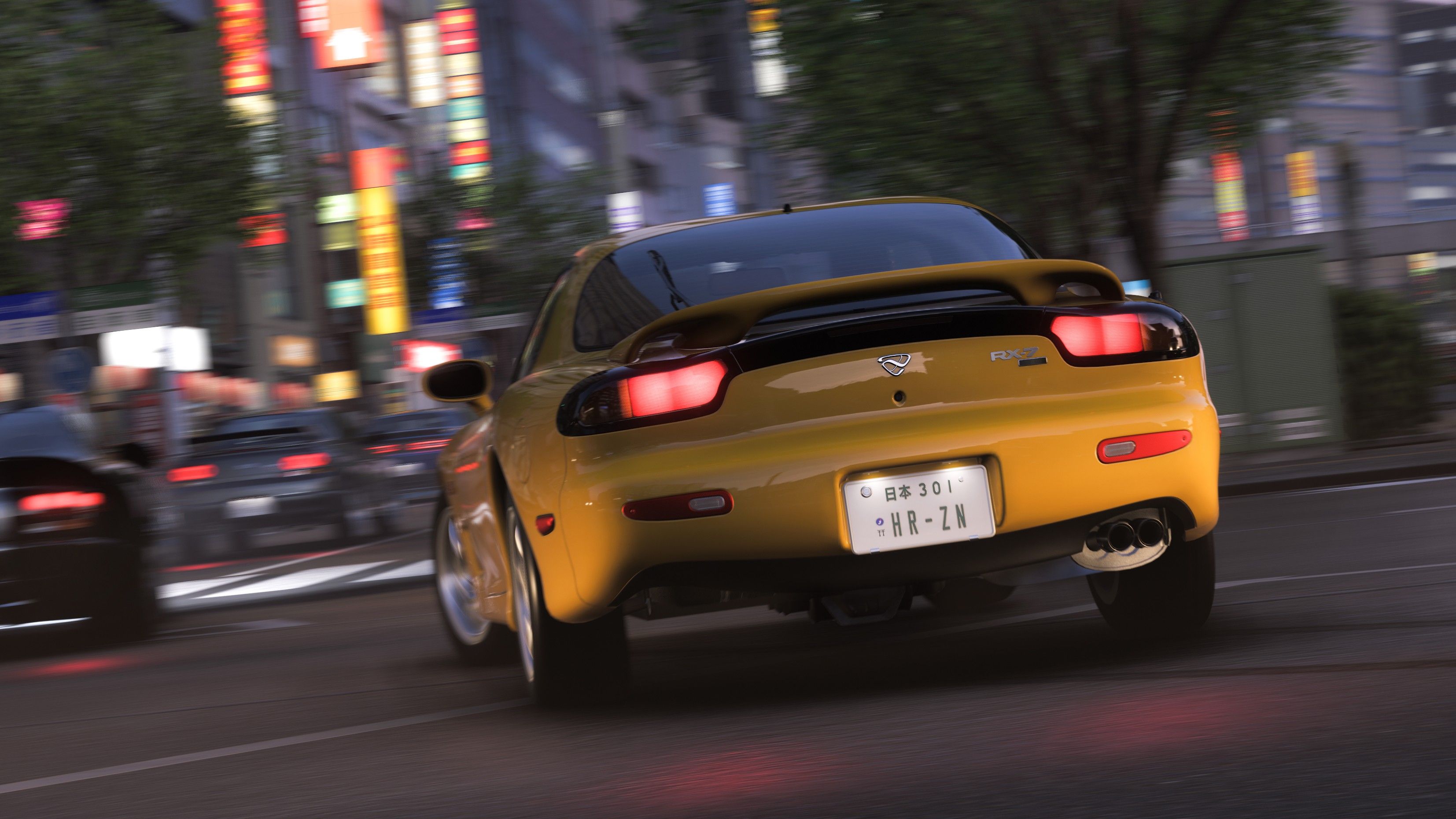
Despite this humble backstory, there's still a showboating prologue, previewing the cars, the racing disciplines, and the scenic highlights of the game's map. The first thing you do in a game is race a Nissan GT-R against a Shinkansen bullet train through avenues of pink cherry blossom, Mount Fuji towering in the background. Then you take the wheel of a Dakar truck to tear down a snowy mountainside as jets and choppers roar overhead. Then you drift a yellow Porsche down the curves of a hillside touge route. Then you race the game's cover star, the Toyota GR GT Prototype, as a spacebound rocket counts down to launch.

It's pretty exciting, and it looks gorgeous, but set against the extravagance of its predecessor, it feels like an obligation: This is how Forza Horizon 6 starts because this is how we expect a Forza Horizon game to start. When it comes to the campaign, Playground certainly has more modest beginnings in mind. In a recent interview with IGN, the developers explained that they intended to create a more "curated" campaign in which the player graduates progressively through car classes via a wristband system, inspired by the original 2012 Forza Horizon.
This is music to my ears, and not just because my memories of that game are so fond. As much as I love Forza Horizon 5 — realistically, it's as good as any other game in this legendarily consistent series — its maximalism can be overwhelming. I experienced it as a flood of car unlocks that came faster than I could drive them, and map icons offering more events than I felt I would ever be able to check off.
There are suggestions of this new back-to-basics approach detectable in the demo, although in terms of structure, it's a pretty limited snapshot — essentially just three qualifying races, and a few other familiar activities like drift zones, speed traps, and "danger zone" jumps to try out. It mostly feels like business as usual for a game series that is the definition of "not broken, so don't fix it."
The starting car lineup is indeed on the modest side. Mei helpfully hands me the three C-class cars needed to compete in the three qualifying races: a tastily modified 1989 Silvia K's with deep skirts and fat rims for road racing, a '94 Celica GT-Four for rallying, and a 1970 GMC Jimmy for off-roading. The towering American 4x4 doesn't really fit the Japanese theme, but its giant tires and jacked suspension are handy for exploring the landscape.