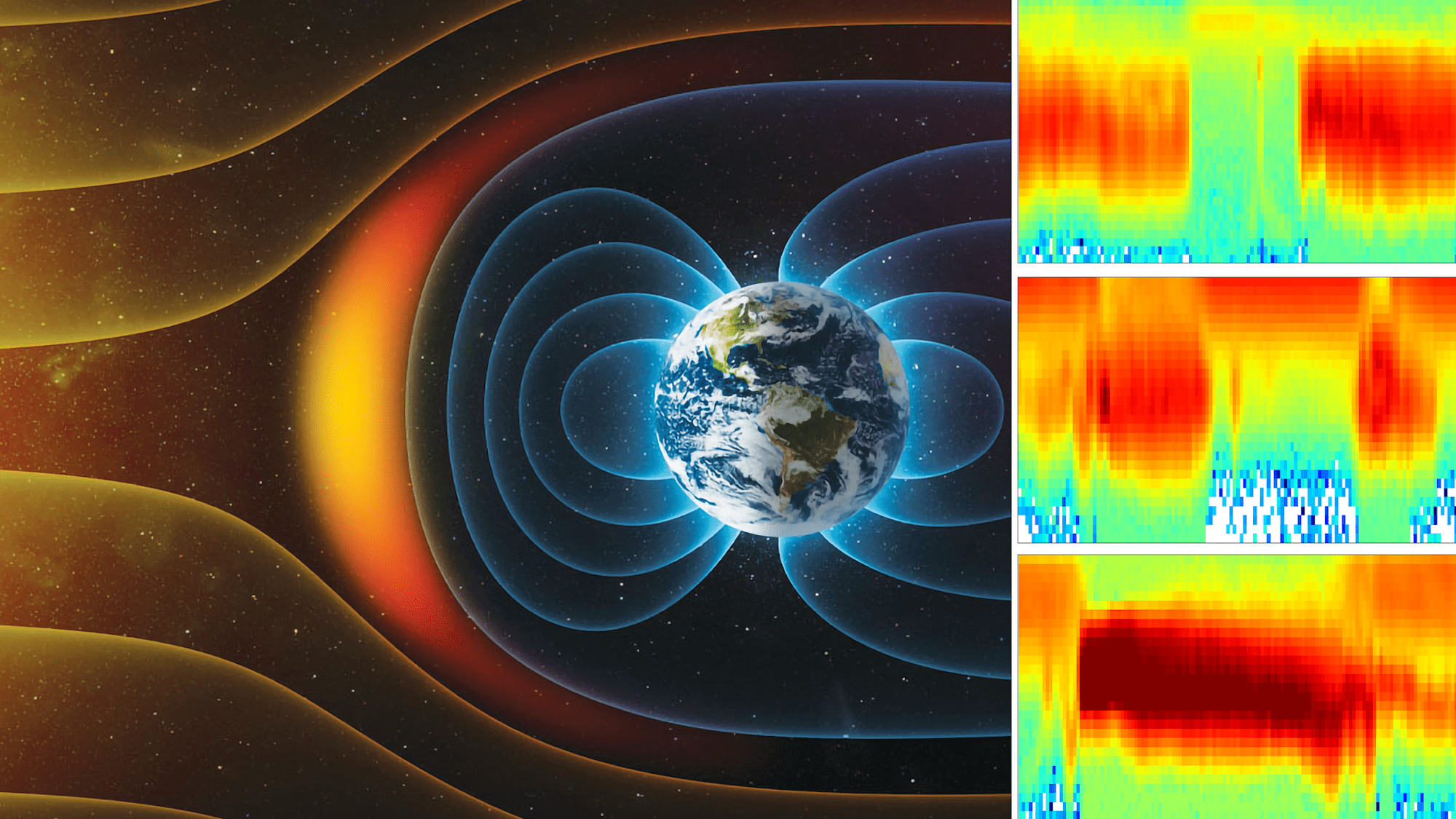
NASA has always made it a point to encourage us citizen scientists to lend them a hand. Right now, they could really use your help protecting Earth against waves of punishing, disruptive solar winds.
The website may look like it’s from the internet circa 2002, but NASA’s Magnetosphere Multiscale (MMS) mission isn’t that old. That said, the project is approaching 16 years of groundbreaking continuous research. MMS provides astronomers with vital information on the sun’s powerful, highly energized solar winds, as well as how they affect the Earth’s magnetosphere. Without the protective shield, the cosmic radiation that would have fried the planet long ago, ensuring no life could ever develop on the planet.
But even with the magnetosphere, solar winds regularly make their presence known—and occasionally make a mess of things. The most famous example is the Carrington Event of 1859, when a powerful solar storm caused dazzling aurora borealis lights to extend all the way into South America. The charged cosmic particles were also strong enough to set some telegraph wires ablaze. Although largely an oddity at the time, a similar situation today would wreak havoc on energy grids, GPS navigation, satellite arrays, and any number of other interconnected electronics systems.
An international coalition of emergency preparedness experts, astronomers, and government agencies has long worked to ready society for such a calamity—and the more information they have on solar winds, the better. NASA’s MMS mission has done just that since launching in 2015 thanks to a quartet of satellites in near-equatorial orbit routinely measuring what’s known as magnetic reconnection. According to the mission’s website, reconnection occurs whenever the sun’s and Earth’s magnetic fields align or separate. This process is responsible for “explosively transferring energy from one to the other in a process that is important at the sun, other planets, and everywhere in the universe. But before you can study magnetic reconnection, you need to know when it actually happens. That’s where the MMS Space Umbrella project comes into play.
While this is a big endeavor, you don’t need a degree in astrophysics to help NASA parse the data. After completing a brief tutorial, volunteers are presented with a spectrum image illustrating 10 minutes of data collected by the four satellites. A one-minute band is highlighted, which participants then review to assess whether it shows the magnetosphere itself, the sheath (a region closer to the sun featuring both solar and planetary energy particles), or a mixture of the two. Spectral data for both the magnetosphere and sheath are particularly easy to see based on the band’s color, width, and positioning. Once familiarized with the details, citizen scientists can then begin classifying MMS satellite data to their heart’s content.
You won’t be alone in your work. The Space Umbrella site includes an active forum for collaboration, regular news updates, and special events. Don’t worry about being late to the party, either. Even with nearly 600,000 logged classifications, the Space Umbrella project is estimated to only be about 40 percent complete—so get to it, solar sleuths.
The post Help NASA prepare for the next solar storm disaster appeared first on Popular Science.