Cortex AI Analítica
"Análisis de relevancia para la actualidad."
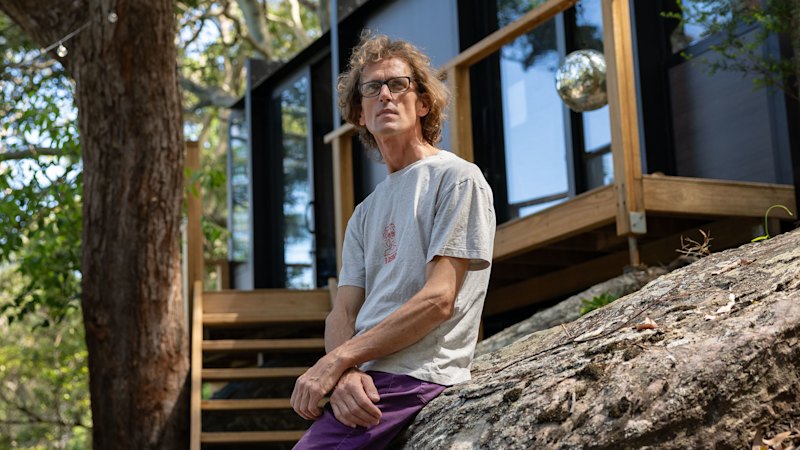
- Martijn Van Eijkelenborg was looking for options to get more space at his Central Coast home.

From flat-pack pods to architect-designed additions, home owners are finding ways to maximise their living space without needing to relocate.
Martijn Van Eijkelenborg, 55, bought a home on NSW’s Central Coast “for the land, not the house”. The one-bedroom, 1970s dwelling was too small for his family, including his wife, a professional musician, who needed rehearsal space.
Martijn Van Eijkelenborg was looking for options to get more space at his Central Coast home. Wolter Peeters
“We used to all be crammed into this tiny little cottage … just on top of each other,” Van Eijkelenborg, a gym manager, said.
But extending the property, which is near a national park, was likely to be a pricey endeavour, taking in council approval and construction to building codes.
Adding 40 square metres to the dwelling “would have been well over a million [dollars] … that’s a conservative estimate”, Van Eijkelenborg said.
Instead, after a year of deliberations, Van Eijkelenborg installed two separate modular pods in his backyard. For $200,000, this gave the family the extra 40 square metres of space.
“It’s a very stylish, very aesthetically designed shed,” he said of the Elsewhere Pod structure.
Despite contending with a hilly and steep site, builders were able to install the pods, which Van Eijkelenborg said had “changed our life”.
Adding two modular pods to the property was much cheaper than adding to the existing dwelling.Wolter Peeters
“Now, with kids in their own rooms away from the house … I could work in one pod, and my wife would practise in the house. There’s just so much more space,” he said.
Matt Decarne, Elsewhere Pods founder, said his mother, who lost her home in the Northern Rivers floods four years ago, inspired him to enter the industry.
“And I just thought, look, enough is enough. Someone’s got to come up with a better solution here for emergency housing and housing that’s built really quickly,” he said.
“So, the way to think about our design is that we make 450 Lego pieces, and the customer is encouraged to play around with those pieces.”
The structures are versatile.
“We’re doing a lot of fold-out wall beds that are also a desk during the day and fold up nice and cleanly against the wall,” he said.
Ayard in Glebe, in Sydney’s inner city, also provided a space maximisation opportunity.
In the spot, architect Simon Anderson from Anderson Architecture created an award-winning 34-square-metre property over two floors.
The Passivhaus dwelling (right) that was built on an unutilised piece of land.Tom Ferguson
“It was a parking space,” he said of the yard, adding that it “also had weeds and a palm tree in it”.
The new dwelling is a Passivhaus, which means a structure meeting high standards for energy efficiency and thermal comfort.
“It’s got some solar panels on the roof, which more than supply power to the small air-conditioner to heat or cool the house,” said Anderson. “It’s also a very healthy way of building because there’s always fresh air coming into the house and always stale air being taken out of the kitchen and bathroom.
“It’s basically some pipes that are always taking stale, smelly, damp air out ... You should see the filter when you take the filters out every six months … black from inner-city smog.”
“It’s an incredibly peaceful house because it’s got quite a lot of insulation and double glazing.”
The dwelling features double glazing.Tom Ferguson
Anderson’s client Deborah Grivas, 58, a retired teacher, has owned the property with her family for about 15 years.
It was an old shop, with a little apartment at the back of it and had been “a student house for probably 80 years”, she said.
When renovation work on the main house started, the overgrown yard was “a waste of space”, said Grivas.
“No one was using it.”
The owner had always been interested in the idea of “urban infill”.Tom Ferguson
Grivas thinks the property is a great example of inner-city places “that have got a bit of space in the back”.
“We’ve always been interested in the idea of urban infill … we liked the idea of using all the space for housing, especially in this climate and the housing crisis,” she said.
“At the moment, it’s a dual income. It’s a great second income for us. We’re putting it on Airbnb, and it’s going really well.”
More:
- Residential property
- Property development
- Glebe
- Construction
- NSW residential property
- Architecture
Property listings
From our partners
Galería de Imágenes