Cortex AI Analítica
"Análisis de relevancia para la actualidad."
- The company says it has now set each processing plant module to a two-million metric tonne-per-annum run-of-mine building block for its critical minerals project.
Brought to you by Bulls N’ Bears
Doug Bright
Osmond Resources has picked up the pace on its ambitious plan to become the European Union’s first extractor of rare earths and the key titanium and zirconium minerals, edging its Spanish Orión EU critical minerals project closer to a scoping study.
The company says it has now set each processing plant module to a two-million metric tonne-per-annum run-of-mine building block for its critical minerals project.
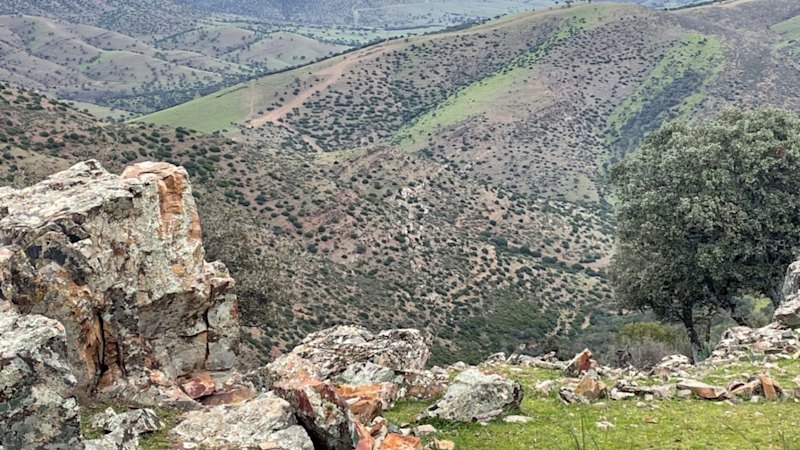
Outcropping mineralised seams at Osmond Resources’ Orión EU critical minerals project in Andalucía, Spain.
The approach is designed to keep initial capital requirements modest by focusing on producing mineral concentrates first, then adding extra modules over time as exploration across the project’s 228 square kilometre footprint expands the opportunity.
To underpin its flowsheet work, Osmond has already dispatched an initial two tonnes from a planned seven tonnes of outcrop samples for processing, with the testwork aimed at optimising the separation of saleable concentrates.
On the ground, the company has expanded its second drilling program to 14 drill holes, with extra holes planned to chase a high-grade zone it believes could extend west from previous standout high-grade drill results. The rigs are expected to fire up in the coming weeks, with initial assay results due this quarter.
Osmond is also laying the groundwork for a downstream value-adding play.
Spanish engineering heavyweight - and Osmond’s new collaboration partner - Técnicas Reunidas has kicked off a pre-feasibility study level review into producing a mixed rare earth carbonate (MREC) from the project’s monazite concentrate, with that work slated for completion in this year’s September quarter.
A second study, also due in the September quarter, is planned to assess production of neodymium and praseodymium oxide. Both are high-value rare earth oxides that are critical to the manufacture of high-performance permanent magnets used in electric vehicle motors and power-generating wind turbines.
The company says it is also in talks on other downstream options for titanium, zirconium and silica.
Osmond’s broader pitch is straightforward. Currently, Europe does not produce or extract any of the titanium, zirconium, hafnium, or rare earth elements it consumes, leaving it heavily reliant on imports.
This fundamental lack of home-grown product is exactly why Osmond is keen to fast-track its flagship Orión project in Spain as an attractive supply option and why it is targeting a scoping study for the second half of the year to capitalise on supportive – and urgently implemented - EU critical minerals policies.
Currently, Osmond owns 51 per cent of Orión, nestled in the Jaén Province of Andalucía in Southern Spain, with local partners Green Minerals Resources owning the balance. However, upon completion of its study, Osmond will control an effective 76 per cent interest in the critical minerals project.
Most significantly, once in operation, the company will become the only producer of rare earths, titanium, zirconium and hafnium in the EU.
With the company’s metallurgy samples already on the move, its drilling program beefed up and downstream studies underway, Osmond is maintaining momentum on practical works and news flow.
If the next round of analytical results comes up with the goods as hoped, the market could soon get a much closer look at just how big Osmond’s Spanish critical minerals story might become.
Is your ASX-listed company doing something interesting? Contact: mattbirney@bullsnbears.com.au
From our partners
Galería de Imágenes