Cortex AI Analítica
"Análisis de relevancia para la actualidad."
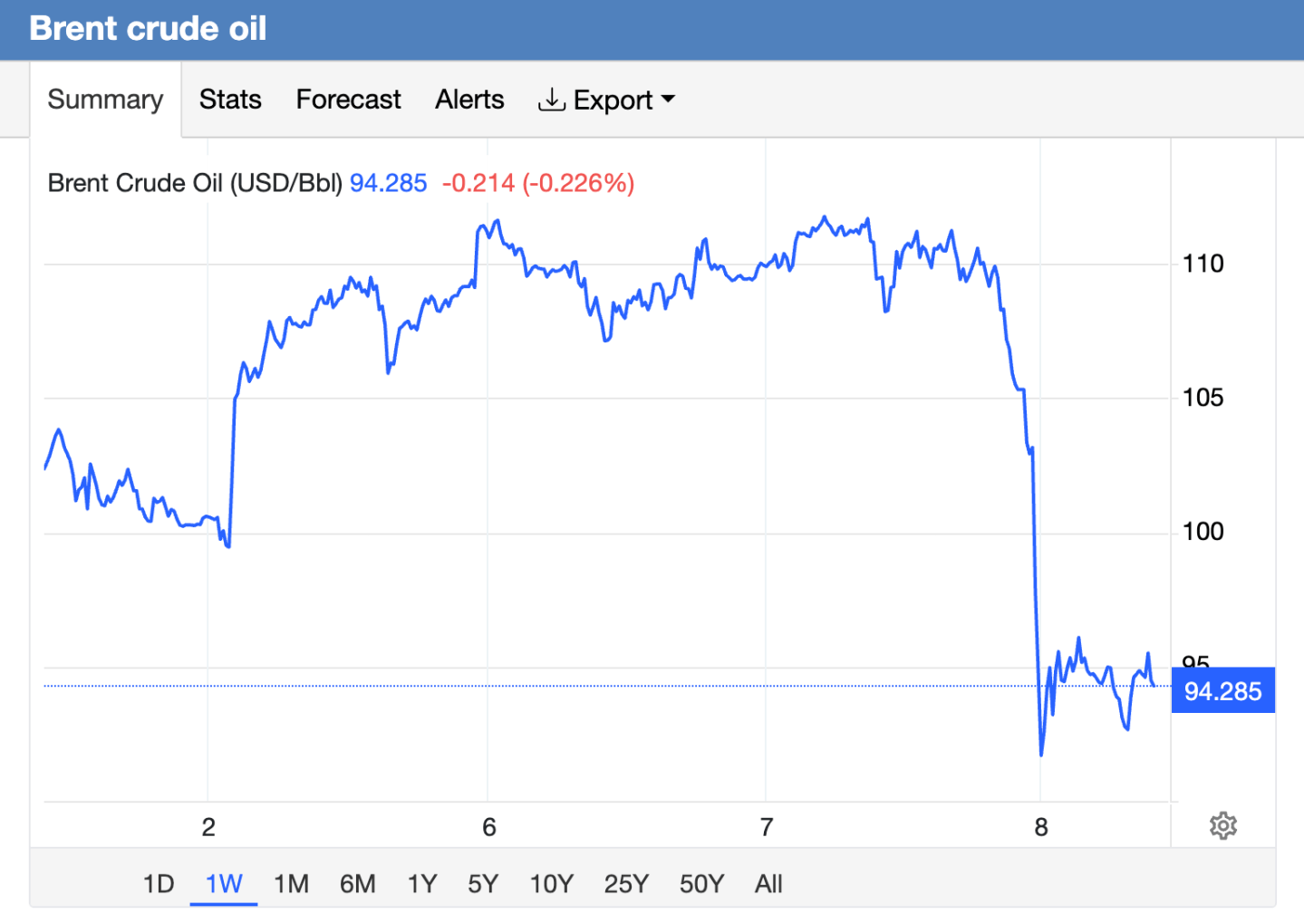
- Oil fell to $94 per barrel this morning, following the U.
ONE BIG THING
Supermicro launches probe into cofounder’s Nvidia chip-smuggling arrest
Supermicro’s board started an internal investigation following a federal indictment alleging one of the company’s cofounders orchestrated the routing of $2.5 billion in servers packed with Nvidia’s GPUs to China, in violation of export controls. Fortune’s Amanda Gerut reports the company is worried the reputational risk could strain its relationship with $4 trillion chipmaker Nvidia, which supplies Supermicro with chips. The board hired law firm Munger, Tolles & Olson to advise its independent directors. AlixPartners will consult on forensic accounting. The two firms will work with Supermicro’s auditor, BDO.
IRAN
Ceasefire puts Hormuz under control of Tehran
The U. S. and Iran have agreed to a two-week ceasefire, averting President Donald Trump’s threat that a “whole civilization will die tonight” if Tehran did not come to terms. Oil fell below $100 per barrel on the news, as the agreement hinges on a 10-point plan from Iran’s Supreme National Security Council that includes reopening the Strait of Hormuz.
Reaction: Governments around the world expressed enthusiasm at the prospect of hostilities being over. Markets jumped on the news.
But the devil is in the details: The 10-point plan contains some proposals that are surprising, to say the least. Among them:
- Reopening the Strait of Hormuz “in co-ordination with Iran’s armed forces” to “guarantee Iran’s dominance.”
- Lifting of all sanctions on Iran.
- An end to U. S./Israeli fighting against Iran’s proxies such as Hezbollah in Lebanon, various Iraqi militias, and the Houthis in Yemen.
- The “withdrawal of U. S. combat forces from all military bases in the region.”
- “Full compensation” for the war via reparations to Iran.
- Israel says Lebanon is not included in the agreement; Pakistan—which brokered the pact—says it is.
- Strikes continued in Lebanon and Jerusalem this morning.
It is hard to imagine that granting Iran control of Hormuz and paying Tehran war damages will be acceptable to the White House. Hence, negotiations!
The Tehran toll would likely be in the ballpark of $1 million per ship, according to the Wall Street Journal. Iran's control of the strait will come with a price. The regime has allowed its own ships through the strait as normal. Friendly nations can get ships through, if they pay $1 million or more per vessel. U. S. ships are banned. Normally, around 130 ships pass through the strait daily. Pakistan recently received permission for 20 ships to pass. The Philippines was reported to have paid up to $2 million per ship for its oil.
Supreme Leader Mojtaba Khamenei is alive, according to Axios. He made a decision to offer a deal on Monday night, the site reports. Khamenei has not been seen since the start of the war when many members of his family were killed and he was reportedly injured.
- The deal heads off a distracting sideshow on the hard right of the Republican party, where Trump has been losing support among talking heads who were disappointed that the president broke his promise to stop entangling the U. S. in foreign wars. Some Republicans, such as Candace Owens, Alex Jones, and Marjorie Taylor Greene, have called for the White House cabinet to invoke the 25th Amendment to the Constitution to remove Trump from office. That was never likely to actually happen, but the ceasefire takes the wind out of the sails of Democrats who had enjoyed the internecine fighting.
What Wall Street is saying today:
Paul Donovan at UBS: “Throughout the war, markets have been inclined to see the oil barrel as half full rather than half empty. Thus, markets are inclined to view the ceasefire as a definite end to the conflict. … If domestic politics drove the U. S. change, this might signal a more enduring settlement. The affordability crisis was made worse by gasoline over $4 per U. S. gallon. Domestic support for the war was low. Republicans suffered a sizable defeat in the Wisconsin Supreme Court election (a swing state).”
On the cost of Iran’s Hormuz traffic tolls: "The numbers imply around a dollar a barrel being added to oil costs via that route, which is economically negligible,” Donovan told clients.
Deutsche Bank’s Jim Reid and colleagues: “Trump’s comment last night that ‘Almost all of the various points of past contention have been agreed to’ suggests a lower bar for agreement, but Iran’s reported 10-point plan includes elements such as the lifting of all sanctions and Iran controlling the Strait of Hormuz that have previously been unacceptable to the U. S. and allies. Those points also do not restrict Iran’s enriched uranium, which Trump suggested would be ‘perfectly taken care of’ as he claimed a ‘total and complete victory’ in an interview to AFP late last night.”
Ed Yardeni of Yardeni Research: “Apocalypse Now, Not!”
AI
Anthropic launches anti-hacker initiative
Anthropic launched “Project Glasswing,” a coalition of major technology companies dedicated to securing the world’s critical software before AI-enabled hackers wreak havoc around the globe. The coalition partners—Apple, Amazon, and Nvidia among them—have been given access to a special cybersecurity-focused version of Anthropic’s yet-to-be-released Mythos model, in the hopes that Mythos can discover zero-day attacks and other vulnerabilities before a commercial version of Mythos is launched. Fortune’s Bea Nolan has the details.
MORE FROM FORTUNE
Trump, the $39 trillion national debt, rosy growth assumptions, and the question of ‘a sustainable path’ - Nick Lichtenberg
Bed Bath & Beyond’s Container Store acquisition echoes past retail mergers that failed to deliver - Phil Wahba
A councilmember backed a data center project. Then 13 bullets and a ‘No Data Centers’ note hit his home - Jake Angelo
Doritos prices jumped 50% in four years and PepsiCo waited until it lost billions to do anything about it - Marco Quiroz-Gutierrez
CHART OF THE DAY
Luxury: The rich are shopping again
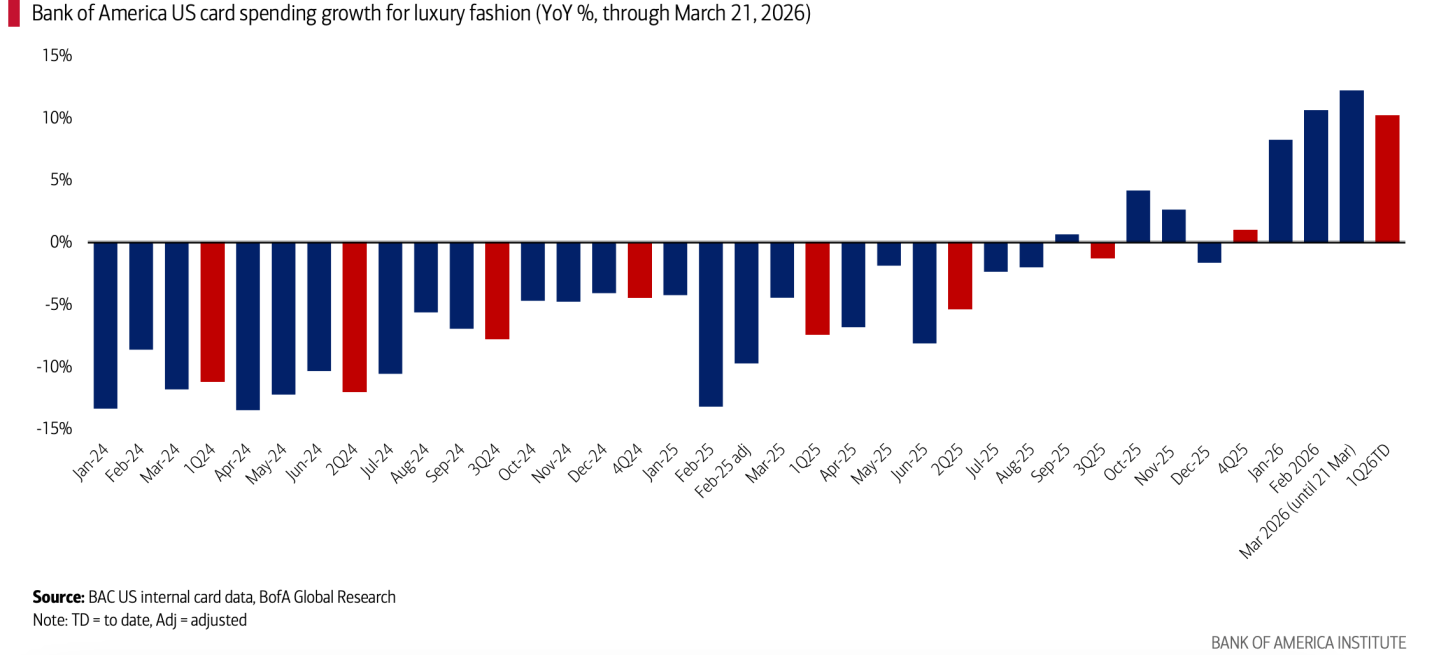
Luxury spending in the U. S. rose 12% year-over-year through March 21, according to Liz Everett Krisberg and David Michael Tinsley of the Bank of America Institute. “All income cohorts are showing a recovery in luxury spending in 2026, although the strongest growth is among higher-income households—unsurprising given the broader ‘K’ shape we’re seeing in consumer spending.”
NUMBER OF THE DAY
-86%
The percentage decline in the local supply of available gasoline in Singapore since the start of the Iran war, according to research by Goldman Sachs.
THE FRONT PAGES TODAY
Perplexity revenue jumps 50% in pivot from search to AI agents - FT
Google CEO Sundar Pichai says ‘AI shift’ opens opportunities to invest in startups - CNBC
Ford Asks Trump Administration for Relief as Tariffs Pummel F-150 - WSJ
As Trump Bullies NATO, Europeans Question Its Deferential Chief - Bloomberg
My Quest to Solve Bitcoin’s Great Mystery - NYT
ONE MORE THING
Global governments ranked by biggest sighs of relief
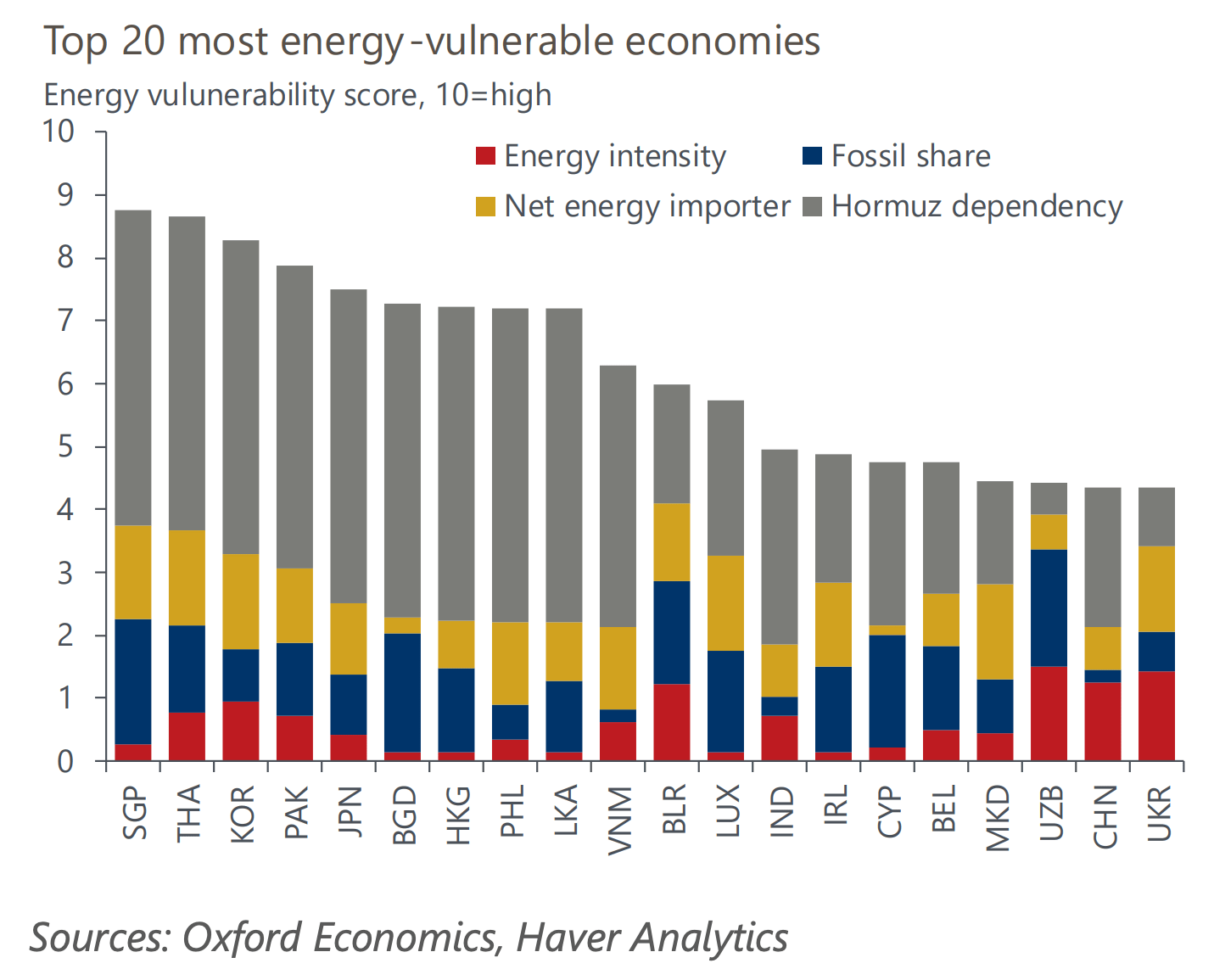
This chart, from Evghenia Sleptsova of Oxford Economics, shows the top 20 countries ranked by how vulnerable they are to disruption in the world’s energy markets, based on factors like how efficiently their economy uses energy, oil imports, dependence on fossils over renewables, and so on. Asian countries were hardest hit by the Iran crisis, followed by smaller European states.
Galería de Imágenes