On any given spring afternoon in Chattanooga, Tennessee, rafters can be seen paddling down a sunny stretch of the Tennessee River. Mountain bikers rush down loamy trails. Families meander along forested paths. And none of them had to travel more than 10 or 15 minutes from their front door to do it.
Chattanooga has been a renowned outdoor adventure capital in the US for over a decade, but last spring, it earned a new title: National Park City, the first of its kind in North America.
The designation celebrates what the city, residents, and non-profits have done to remodel the city’s reputation, honors the impressive access to nature the city offers, and prioritizes protection of green spaces. “[Chattanooga is a] big national park with a bunch of little national parks in it,” according to Brian Smith, interim administrator for Chattanooga Parks and Outdoors and local National Park City director.
Here’s how it came to be, what the city has done to transform from a polluted mess to a natural playground, and what it means for nature, residents, and visitors.
What is a National Park City?
Not to be confused with gateway cities that border national parks or cities within or encompassing national parks, a National Park City as defined by the certifying body, National Park City Foundation, is a destination inspired by these remarkable places. They are cities where people connect with nature and where protection of nature is a priority, explains Mark Cridge, executive director of the UK-based non-profit.
They are places that challenge the understanding of who and what a city is for by focusing on long-term visions for the future that center around the relationship between people and nature—much like at national parks, but in urban environments. London, England, became the first National Park City in 2019, followed the same year by Adelaide, Australia; then Breda, Netherlands; and Chattanooga, Tennessee, in 2025. Six more US cities have since expressed interest in becoming certified as a National Park City.
Cities aiming for designation have to complete a thorough, sometimes multi-year application and vetting process to prove they qualify. They must show that they’ve made strides to be a nature-focused, outdoor-accessible destination, and also that they intend to continue improving in those departments.
National Park Cities are nature-adjacent and offer residents easy ways to spend more time exploring the wild places on their doorsteps, which in cyclical fashion, encourages more people to consider and care about biodiversity and the climate crisis where they live, Cridge says. Just as importantly, it’s an invitation for residents to see their city in a new light as they imagine a different future for their home than they may have in the past.
Given Chattanooga’s history and progress, the city was a prime candidate.
A long road to designation
“Chattanooga was not all that great,” Smith is the first to admit. It was dubbed “the dirtiest city in America” by Walter Cronkite in 1969 thanks to heavy industrial operations that took place in town. Then there’s the uncomfortable history and traumatic heritage of the slave trade, bloody Civil War battles, and the Trail of Tears.
Since then, however, a lot of people have taken a chance on the city with betterment in mind, Smith said, including local government. The city unveiled the first two miles of the Tennessee Riverwalk in 1989 (it’s now 16 miles of interconnected paths), the Tennessee Aquarium opened in 1992, and countless outfitters and entrepreneurs started businesses over the decades, making a more enticing place to plant roots, both figurative and literal.
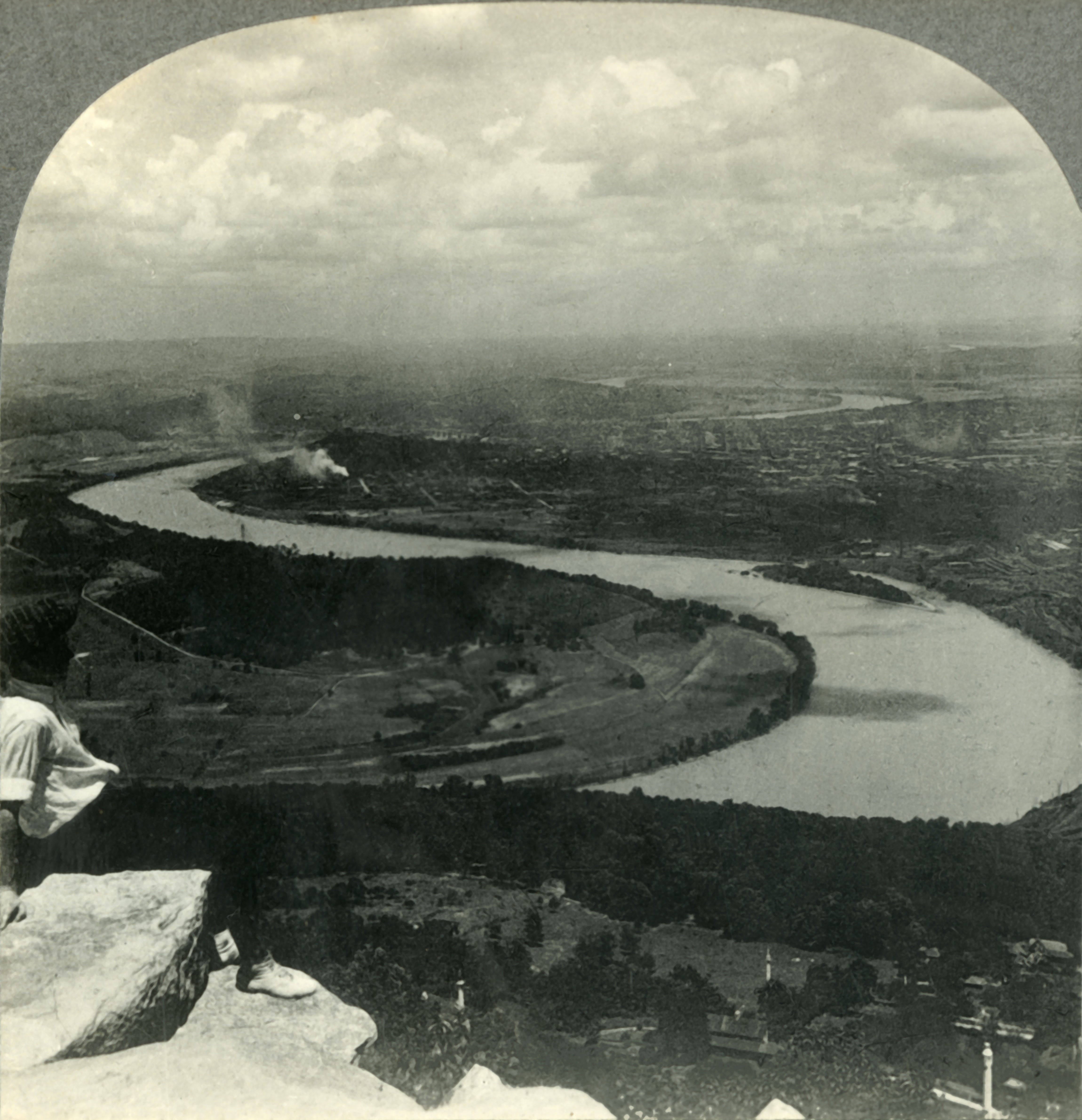
Little by little, Chattanooga cleaned up its act, redefined its character, and became an outdoor adventure epicenter that’s been recognized multiple times by Outside magazine as a “Best Town” for outdoor recreation and beyond.
So while the National Park City designation may be new, it celebrates decades of targeted effort to make Chattanooga a cleaner, more outdoor-accessible, nature-centric place, Smith states. And everyone is on board, from city officials to new residents. The program was initially city-led, Smith explains—it was the city government that reached out to the Foundation and kicked off the process—but has since been embraced by the community.
It required detailed action plans and community participation—including community meetings, over 5,000 supporting signatures, and more than 100 support letters from local non-profits and businesses—that indicated a shared responsibility and ambition to connect more nature to the city and protect what already exists. Going forward, it will be mainly community-led and city-supported.
Change is evident
Now, public art abounds in the city, including in alleyway art projects and murals. There’s a renewed focus on preservation of public land, rewilding and preservation projects, including the Chattanooga Zoo’s endangered Hellbender salamander breeding program and the aquarium’s sturgeon reintroduction initiatives. The community also fought to save protections on a beloved local green space, Enterprise South Nature Park, and won, thwarting a plan to rezone the land and repurpose it for industrial use.
The city hired a natural resources team dedicated to restoration and preservation of green spaces and waterways. The city has worked with the local Audubon Society to implement goat grazing to fight invasive species on Maclellan Island. Plus, it’s committed to build and restore parks, plant only native species, hire horticulturalists, pass a tree ordinance, and plant thousands of trees as part of a $6 million grant, according to Smith. Since designation, the city has also launched a Seed Drive that aims to gather funding for 100 locally proposed ideas that bring the community together to improve quality of life. Then there’s the access: Within 5 to 15 minutes you can travel from downtown to any number of outdoor activities, including mountain biking, hiking, kayaking, rock climbing and more. Trail and waterway use abounds.
“It’s amazing to see the amount of people outside doing the things they love to do,” Smith says.
Residents have noticed the changes. Casey Hyde, CEO of local adventure apparel brand Teren, has lived in the area for 10 years on and off since 2010. It’s the unparalleled access to outdoor recreation that keeps drawing him back.
That, and the diversity of people that call the city home, which Hyde says creates a rich tapestry of experiences indoors and out. That’s part of what the designation promotes: a place that everyone from all walks of life can enjoy.
“We’ve really taken a true 180 since being named one of the most polluted cities in the nation,” Hyde states. “We’ve come a long way, and it definitely feels like we are proud of it.”
Full steam ahead
Of course, this designation doesn’t mean Chattanooga plans to rest on its laurels; the work to improve access to nature, protect wild spaces, and improve the lives of all residents will continue. “It’s not declaring that we’re perfect, but let’s celebrate what we’ve done so far,” Smith says.
“Becoming a National Park City is the start of the journey, not the end,” Cridge adds.
The post Chattanooga is the United States’ first National Park City appeared first on Popular Science.